
Rehab SEO
Rehab SEO built around each level of care you offer.
Someone searching for alcohol detox is in a different place than someone looking for an evening IOP. We build and rank pages for each program you run, in each area you serve, so the right person lands on the right page.
4.9 on Clutch 5.0 on GoogleBoutique team in Orange County, CABehavioral health specialists

Written by Ara Bedelian, Founder & CEO7+ years in behavioral health marketing · Updated
SEO for addiction treatment programs
The short answer
What rehab SEO covers.
Rehab SEO is search engine optimization for addiction treatment centers. It covers the technical health of your website, pages for each level of care and substance you treat, local search for the cities you serve, content that answers patients’ questions, and structured data that helps Google and AI tools understand your program. Good rehab SEO is measured in admissions calls, not just traffic.
One page per program
A single “Our Programs” page can’t rank for detox, residential and IOP at once. We give each level of care its own page with its own details, insurance notes and FAQs.
Substance-specific searches
People search for help with a specific drug: alcohol, fentanyl, meth, benzos. Pages that speak to each one rank better and reassure readers that you treat what they are dealing with.
Searches with intent
We track phrases like “detox that takes Blue Shield” and “rehab near me,” not broad terms that bring in students writing papers.
The rehab SEO guide
How rehab SEO actually works, step by step.
Key takeaways
- Rehab SEO is won page by page: every level of care, substance and city you serve needs its own useful page.
- Google treats treatment content as “Your Money or Your Life” content, so accuracy, named experts and clear sourcing matter more than in most industries.
- The searches that fill beds are specific (“alcohol detox that takes Aetna”), not broad (“addiction”).
- Technical health, local signals and content all have to work together. Fixing only one rarely moves rankings.
- Measure success in admissions calls and verifications, not traffic alone.
Why SEO is different for treatment centers
Most industries can rank with decent content and a few good links. Addiction treatment is harder for three reasons. First, Google classifies health and safety topics as Your Money or Your Life content, which means its quality raters look for real expertise, clear authorship and trustworthy sources before a page is considered high quality. Second, the market is crowded with directories, call centers and large national brands that publish thousands of pages. Third, many of the people searching are in crisis, so the page that ranks also has to help someone make a decision quickly.
That combination means shortcuts tend to backfire. Thin city pages, recycled blog posts and keyword-stuffed program descriptions might get indexed, but they rarely hold rankings, and they almost never convert a worried parent into a phone call. Good rehab SEO looks more like building the most useful, most accurate resource in your area for the programs you actually offer.
The searches that actually turn into admissions
Not every keyword is worth chasing. A blog post that ranks for “what is addiction” may bring in thousands of visitors who are writing school papers. A page that ranks for “medical detox near Irvine” may bring in fifty visitors a month, and several of them will call. We group keywords by intent so effort goes where calls come from.
| Search type | Example | What it usually means | Best page to rank |
|---|---|---|---|
| Urgent local | detox near me, rehab open now | Ready to call today | Location page and Google Business Profile |
| Level of care | residential treatment for alcohol | Comparing program types | Dedicated level-of-care page |
| Insurance | rehab that takes Blue Shield | Checking if they can afford it | Insurance page with verify form |
| Substance specific | fentanyl detox, meth rehab | Looking for the right specialty | Substance treatment page |
| Family research | how to help an addicted son | Early stage, building trust | Helpful guide that links to admissions |
| Broad informational | what is addiction | Low buying intent | Only if it supports your other pages |
Build one strong page for each program
The most common problem we see is a single “Programs” page that tries to cover detox, residential, PHP and IOP in a few paragraphs each. Google cannot tell which search that page should rank for, and visitors cannot tell whether you treat their situation. Splitting it into separate, detailed pages almost always helps.
A strong level-of-care page answers the questions a family would ask on the phone. Who is this program for? How long does it last? What does a typical day look like? Which insurance plans cover it? What happens on the first call and the first day? Each of those answers is also something people type into Google, so a thorough page naturally ranks for dozens of related searches.
- Who it is for and who would be better served elsewhere
- Length of stay and how step-down works
- A typical day, with real schedule examples
- Clinical approach and the credentials of the team
- Insurance and cost, stated plainly
- Admissions steps, from first call to arrival
- Real photos of the rooms and spaces used
- FAQs pulled from actual admissions calls
The same logic applies to substances and co-occurring conditions. If you treat alcohol, opioids and stimulants, each deserves its own accurate, reviewed page, linked to the levels of care where that treatment happens. If you have a dual diagnosis track, that page should explain how mental health and substance use care are coordinated.
Technical SEO: the foundation nobody sees
A beautiful page that loads slowly or cannot be crawled will not rank. Technical SEO is the plumbing: site speed, mobile layout, clean URLs, correct redirects, an XML sitemap Google can read, and structured data that describes your organization, locations, services and FAQs in a way machines understand.
We run a full crawl at the start of every engagement and then monitor the site daily for broken pages, slow templates and indexing problems. Redesigns are the most dangerous moment for rankings, so when a site is rebuilt we map every old URL to its new home before launch.
Local SEO and the map results
For searches like “detox near me,” Google usually shows a map with three listings before any regular results. Those listings are driven by your Google Business Profile, your reviews and how consistently your name, address and phone number appear across the web. For many centers the map pack produces more calls than the rest of the website combined. We cover this in depth on our local SEO for rehab centers page.
Content that earns trust, not just traffic
Rehab content has to be right. We write in plain language, link to authoritative sources such as SAMHSA and the National Institute on Drug Abuse, and set pages up for review by your clinical team. Each medical page shows who wrote it and who reviewed it, with links to their bios. This is good for readers, it lines up with what Google’s quality raters are asked to look for, and it gives AI tools a reason to quote you.
We avoid claims that create risk. Success rates without a clear source, promises of a cure and language that implies guarantees all draw attention from regulators and from LegitScript reviewers if you run ads. Honest content tends to rank and convert better anyway, because people in this situation are skeptical of anything that sounds like a sales pitch.
How rehab SEO and AI search fit together
More people now ask ChatGPT, Perplexity or Google’s AI Overview where to go for detox before they click a single link. Those systems lean heavily on pages that already rank well and that state facts clearly. The same work that improves rehab SEO, such as clear program pages, structured data and consistent facts, also makes your center easier for AI tools to describe correctly. Our AI search optimization service adds the AI-specific pieces on top.
What a realistic timeline looks like
Every market is different, and anyone who promises page one in thirty days is guessing. What we can promise is a clear plan, weekly visibility into what we are doing and why, and reporting that ties rankings to real calls.
How we measure results
Traffic is a means, not the goal. We set up call tracking with CallRail or CallTrackingMetrics and tag forms by source, so you can see which pages and searches produce admissions conversations. Reports show rankings for the searches that matter, calls and verifications by landing page, and what we plan to do next.
Common rehab SEO mistakes we fix
| Mistake | Why it hurts | Fix |
|---|---|---|
| Dozens of near-identical city pages | Seen as doorway pages and ignored | Fewer, genuinely local pages |
| One page for every program | Cannot rank for specific searches | Separate level-of-care pages |
| No named authors or reviewers | Weak trust signals on health topics | Author and clinical reviewer bios |
| Old URLs lost in a redesign | Rankings and links disappear | Full redirect map before launch |
| Blog posts on unrelated topics | Traffic that never calls | Content tied to services you offer |
Sources
- Google Search Central, Creating helpful, reliable, people-first content: developers.google.com/search/docs/fundamentals/creating-helpful-content
- Google Search Quality Rater Guidelines: static.googleusercontent.com/media/guidelines.raterhub.com/en//searchqualityevaluatorguidelines.pdf
- SAMHSA, Find Treatment: findtreatment.gov/
What’s included
What a rehab SEO program includes.
Every engagement is shaped to your market, but these are the parts we work on for most centers.
Technical SEO
Site speed, mobile usability, crawl errors, redirects and Core Web Vitals, fixed and then monitored daily.
Level-of-care pages
Detox, residential, PHP, IOP and outpatient pages with clear criteria, length of stay and what a day looks like.
Substance and condition pages
Accurate, reviewed pages for the substances and co-occurring conditions you actually treat.
Local search
Google Business Profile, citations and city pages for your real service area. See local SEO for rehab centers.
Structured data
MedicalClinic, Service, FAQ and author markup so search engines and AI tools read your site correctly.
Reporting tied to calls
Weekly reports and call tracking that connect rankings to the conversations they create.
How it works
From audit to admissions calls.
Audit
Technical crawl, content review, keyword gaps and a look at the programs outranking you.
Map
We match each level of care and substance to the searches people make, and plan the pages.
Build
Technical fixes, new and rewritten pages, structured data and internal links.
Track
Rankings, calls and form fills reported weekly, with the plan adjusted as we learn.
Clinical accuracy
SEO content that holds up to clinical review.
Treatment content has to be right. Google holds health pages to a higher standard, and families notice when a page is vague or wrong.
We write in plain language, cite trusted sources such as SAMHSA and NIDA, and set pages up for review by your clinical team, with visible authors and reviewers.
- Named authors and clinical reviewers on medical content
- Sources cited where it matters
- No promises about success rates or cures
- Pages updated when your programs change
This is also what helps your content get quoted in AI answers.
Everyone works well together and makes sure the jobs are completed and clients are satisfied.
Our work
Addiction treatment programs we’ve helped grow.
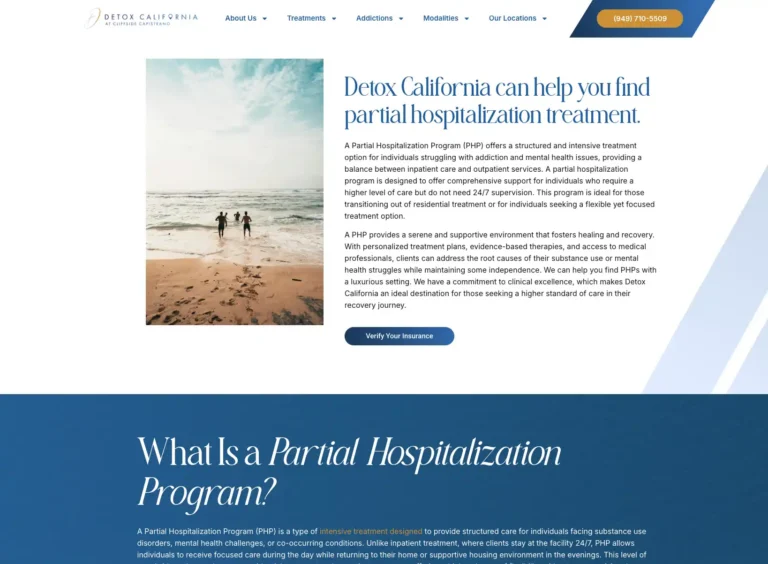
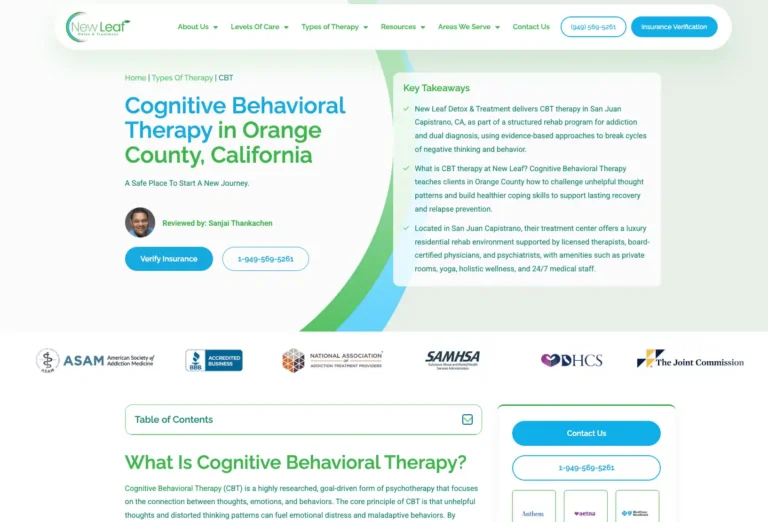
Client reviews
Rated 5.0 on Google and 4.9 on Clutch.
GoogleWhat clients say on Google
What is rehab SEO?
It is SEO for addiction treatment centers: technical fixes, pages for each level of care and substance, local search, helpful content and structured data, measured by admissions calls.
How long does rehab SEO take to work?
Most programs see early movement in two to three months and steadier growth around six months. Competitive metro areas take longer.
Can you guarantee first-page rankings?
No honest agency can. Google decides rankings. We can show you exactly what we are doing, why, and what it is producing each week.
Do you write the content?
Yes. We write it in plain language and set it up for review by your clinical staff before it goes live.
Will SEO help us show up in ChatGPT and AI Overviews?
Strong SEO is the foundation for AI visibility, and we add the structure AI tools look for. Our AI search optimization page covers this in more detail.
What does rehab SEO cost?
It depends on your market, number of locations and how much content is needed. We give a clear monthly quote after a free audit.
Is blogging still worth it for treatment centers?
Yes, when posts answer real questions families ask and link to the right program pages. Posts on unrelated topics bring traffic that rarely turns into calls.
Do backlinks still matter?
They do, but quality matters far more than quantity. Mentions from local organizations, healthcare associations and news coverage help; bought links can hurt.
About the author
Ara Bedelian
Ara has spent more than seven years working with addiction treatment centers and mental health providers on website design, branding and search engine optimization. His work spans every stage of how someone finds treatment, from the first Google search to the moment they decide to call.
Keep exploring
Related services.
More for addiction treatment programs
Free website audit
Ready to grow with a partner who cares?
Tell us a little about your organization. We’ll review your website and search presence and share clear, practical recommendations — free.
- ✓A personalized website & SEO review
- ✓Clear next steps, no jargon
- ✓No obligation, no pressure
Prefer to talk? Call (949) 394-7041