
Mental health website design
Websites that make the first appointment feel easier.
For many people, booking a first therapy or psychiatry appointment takes real courage. We design calm, clear websites for practices and clinics that answer the hard questions up front and make reaching out simple.
4.9 on Clutch 5.0 on GoogleBoutique team in Orange County, CABehavioral health specialists

Written by Ara Bedelian, Founder & CEO7+ years in behavioral health marketing · Updated
Websites for mental health providers
The short answer
What a mental health website needs.
A good mental health or therapist website explains the services and conditions you treat in plain language, introduces your clinicians, states which insurance you accept and what sessions cost, and offers a simple way to book or request a consultation. It should be calm to look at, accessible to people with disabilities, fast on a phone and built for local and AI search.
Calm design
Soft contrast, plenty of space and readable type. Nothing flashing or pushy. People should feel steadier after visiting, not more anxious.
Clinicians up front
People choose a person, not a practice. Provider pages with specialties, approach and availability do a lot of the work.
Booking without friction
Online scheduling or a short request form, with a clear note on what happens next and how soon.
The mental health website guide
Designing a website people feel safe contacting.
Key takeaways
- Someone booking a first therapy or psychiatry appointment is often anxious. The site should lower that anxiety, not add to it.
- People choose a clinician, not a practice. Provider pages do more work than the home page.
- Insurance, fees and availability are the questions that decide whether someone books.
- Privacy-aware tracking and accessible design are part of doing this well, not extras.
- A clear structure of service, condition and provider pages is what lets the site rank later.
Start with how the visitor feels
Reaching out for mental health care is hard. Many people put it off for months. By the time they land on your website they may be exhausted, embarrassed or unsure whether their problem is “serious enough.” A practice website has one main job: make the next step feel possible.
That changes the design brief. Bright urgency banners, crowded layouts and stock photos of people with their head in their hands all work against you. Calm colors, generous spacing, short sentences and a visible, low-pressure way to reach out work for you.
The pages that matter most
| Page | What it does | What to include |
|---|---|---|
| Home | Sets tone and orients visitors | Who you help, how, where and how to start |
| Services and conditions | Matches what people search | Anxiety, depression, trauma, couples, ADHD and others you treat |
| Clinician profiles | Helps people choose a person | Photo, credentials, approach, specialties, ages seen, availability |
| Insurance and fees | Answers the biggest practical question | Plans accepted, self-pay rates, superbills, sliding scale if offered |
| Getting started | Removes fear of the unknown | Steps from first contact to first session |
| Telehealth | Explains online care | States served, technology used, what a session looks like |
| Contact | Last step | Phone, short form and response time |
Clinician profiles do the heavy lifting
Most people choose a therapist the way they would choose a doctor: by reading about the person. Strong profiles include a warm, natural photo, credentials and licenses, the issues and populations each clinician focuses on, their approach in plain language, whether they offer telehealth, and whether they are accepting new clients. Each profile can also rank on its own for searches like a clinician’s name or specialty.
- Natural photo, not a corporate headshot
- License and credentials, spelled out
- Focus areas and the ages they see
- Approach explained in a sentence or two
- In person, telehealth or both
- Accepting new clients, kept current
Booking without friction
Whether you use an online scheduler from your EHR or a simple request form, the path to booking should take a minute, not ten. We keep forms short, explain what happens after someone submits, and set clear expectations for response times. If you have a waitlist, saying so honestly builds more trust than silence.
Privacy by design
Mental health websites handle sensitive moments. In recent years, federal regulators have taken action against health companies that shared visitors’ health information with advertising platforms through tracking pixels. We keep tracking minimal on condition and booking pages, avoid sending sensitive data to ad platforms, and make sure forms ask only for what your team needs to follow up.
Accessibility helps everyone
Good contrast, readable type, keyboard navigation, descriptive links and alt text help people with disabilities and make the site easier for everyone under stress. We build toward WCAG 2.1 AA, the standard referenced by recent federal accessibility rules for healthcare organizations that receive federal funds.
Built for search from the start
A clean structure of service, condition, location and clinician pages is exactly what SEO for therapy practices needs. We add structured data for your practice, locations, providers and FAQs, and connect each page to related pages so both visitors and search engines can find their way.
Writing in a voice that feels human
Copy on a mental health site should sound like a kind, competent person talking. We avoid clinical jargon unless it is explained, avoid promising outcomes, and write the way your clinicians would speak to someone in their first session. Each page has one clear next step.
| Instead of | We write |
|---|---|
| “Evidence-based modalities for affective disorders” | “Proven approaches for depression and anxiety” |
| “Get your life back today!” | “Take the first step at your own pace” |
| “Submit inquiry” | “Request a first appointment” |
| “Our clinicians are the best” | Specific credentials and focus areas |
A telehealth page that answers the practical questions
Telehealth is now a normal part of mental health care, and people want to know exactly how it works before booking: which states you serve, what platform you use, what they need on their end, and whether online and in-person sessions cost the same. A dedicated page answers all of that in one place.
Our launch checklist
- Every page reviewed by your clinical lead
- Forms tested end to end, with confirmation messages
- Booking links checked for every clinician
- Accessibility check for contrast, headings and keyboard use
- Redirects from any old URLs
- Analytics configured with privacy in mind
- Google Business Profile linked to the right page
- Speed test on real mobile devices
Sources
- W3C, WCAG 2.1 overview: www.w3.org/WAI/standards-guidelines/wcag/
- HHS Office for Civil Rights, Use of online tracking technologies by HIPAA covered entities: www.hhs.gov/hipaa/for-professionals/privacy/guidance/hipaa-online-tracking/index.html
What’s included
What goes into a Create Flo mental health website.
Custom design on WordPress, set up so your team can keep it current.
Service and condition pages
Anxiety, depression, trauma, couples and more, each with who it is for and what to expect.
Clinician profiles
Bios, credentials, specialties and availability for every provider.
Insurance and fees
Accepted plans, self-pay rates and superbills explained clearly.
Booking integration
Connections to your scheduling or EHR booking tools, or a simple request form.
Accessibility
Built toward WCAG guidelines: contrast, keyboard navigation and screen reader support.
Search-ready structure
Page structure and structured data for therapist SEO and AI search.
How it works
From kickoff to launch.
Discover
Your services, providers, payers and the clients you want to reach.
Plan
Sitemap, page outlines and the booking path.
Design & build
Custom design, written content and a fast WordPress build.
Launch & care
Redirects, tracking and search setup, then monthly management.
Privacy by design
Built with client privacy in mind.
Mental health websites handle sensitive moments. We keep tracking minimal on condition and booking pages, and avoid tools that could share health-related browsing with ad platforms.
Contact forms only ask for what you need to follow up.
- No ad pixels on sensitive pages
- Short forms that ask only what is needed
- Clear privacy policy and consent language
- Secure hosting and regular updates
It’s one less thing for you to worry about.
CreateFlo has exceeded our expectations across all areas of the project.
Our work
Mental health providers we’ve helped grow.
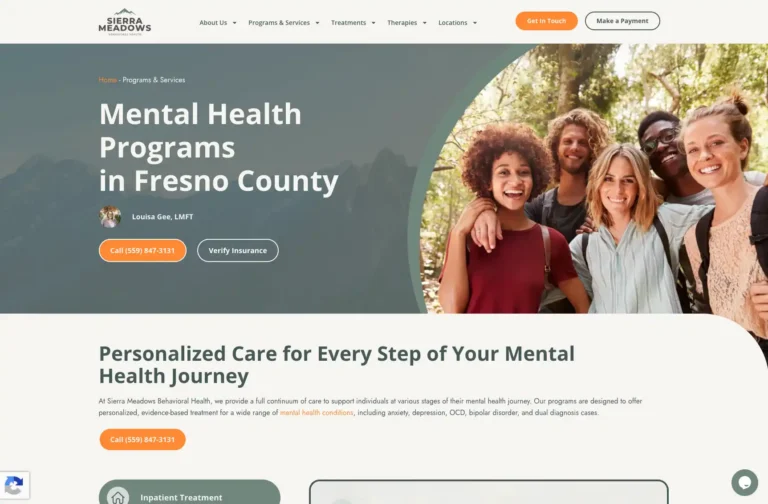
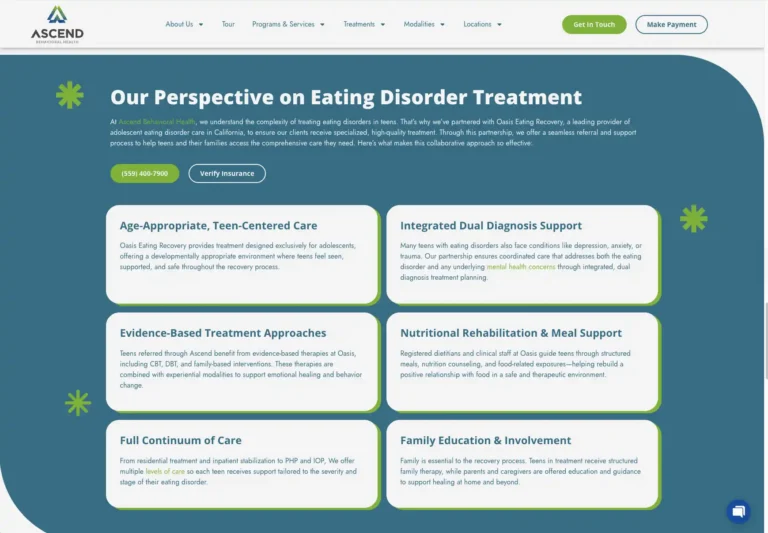
Client reviews
Rated 5.0 on Google and 4.9 on Clutch.
GoogleWhat clients say on Google
How much does a therapist website cost?
It depends on the number of providers, pages and integrations. We give a fixed quote after a short discovery call.
Can you connect our scheduling software?
In most cases, yes. We can link or embed common practice scheduling tools, or set up a simple request form.
Do you design for group practices and clinics?
Yes. Group practices and multi-provider clinics are a large part of our mental health work.
Will the site help us rank on Google?
It is built with the structure SEO needs. Ongoing SEO work is a separate service that builds on it.
Do you use photos of clients?
No. We use photos of your space and team, or carefully chosen imagery, never images that suggest real clients.
Do you build HIPAA-compliant forms?
We set up forms that collect only what is needed and send it through secure, HIPAA-appropriate tools when health information is involved. Your EHR or practice software is often the best place for intake.
How do you handle clinician photos?
We prefer natural, consistent photos and can art direct a photo session for your team.
Is the accessibility deadline relevant to us?
If your practice receives HHS funding, the HHS Section 504 rule requires WCAG 2.1 AA, with deadlines extended in 2026 to May 2027 for larger organizations. Building accessibly from the start avoids rework.
About the author
Ara Bedelian
Ara has spent more than seven years working with addiction treatment centers and mental health providers on website design, branding and search engine optimization. His work spans every stage of how someone finds treatment, from the first Google search to the moment they decide to call.
Keep exploring
Related services.
More for mental health providers
Free website audit
Ready to grow with a partner who cares?
Tell us a little about your organization. We’ll review your website and search presence and share clear, practical recommendations — free.
- ✓A personalized website & SEO review
- ✓Clear next steps, no jargon
- ✓No obligation, no pressure
Prefer to talk? Call (949) 394-7041