
AI search optimization
When people ask AI for help, be the answer it gives.
More people now ask ChatGPT, Perplexity or Google’s AI Overview where to find detox or therapy before they ever click a link. We help treatment centers show up in those answers, described accurately and linked to your website.
4.9 on Clutch 5.0 on GoogleBoutique team in Orange County, CABehavioral health specialists

Written by Ara Bedelian, Founder & CEO7+ years in behavioral health marketing · Updated
AI visibility for behavioral health
The short answer
What AI search optimization is.
AI search optimization, also called answer engine optimization (AEO) or generative engine optimization (GEO), is the work of making your organization easy for AI tools to understand, trust and cite. For treatment centers that means clear facts about your programs, locations and insurance, question-and-answer content, structured data, consistent information across the web, and visible clinical expertise.
AI reads facts, not slogans
AI tools pull out specifics: levels of care, accepted insurance, location, accreditation. If those facts are vague or scattered, you get skipped or described wrong.
Consistency builds confidence
When your website, Google profile and directory listings all say the same thing, AI systems are more likely to repeat it.
SEO is the foundation
AI answers draw heavily on pages that already rank well. We build on rehab SEO and behavioral health SEO rather than replacing them.
The AI search guide
How AI answers find, describe and cite treatment centers.
Key takeaways
- Google says AI Overviews reach more than 2 billion people a month, and ChatGPT reports hundreds of millions of weekly users.
- About a third of U.S. adults used AI chatbots for health information in the past year; 16% for mental health.
- AI tools pull out specific facts. Vague or inconsistent information gets you skipped or described wrong.
- Strong SEO is the foundation: AI answers lean on pages that already rank and state facts clearly.
- llms.txt is a proposal, not a standard. It can help, but it is not a ranking switch.
Why AI answers matter for treatment centers
Search is splitting into two paths. Some people still scroll through links. Others read an AI-generated summary at the top of Google, or ask ChatGPT or Perplexity directly. Google has said AI Overviews reach more than 2 billion monthly users, and OpenAI reports that ChatGPT has hundreds of millions of weekly users.
For a treatment center, this changes what visibility means. It is not only about ranking first; it is about being named, described accurately and linked as a source when someone asks an AI tool where to get help.
How AI tools decide what to say
AI search tools generally retrieve pages from the web, extract facts and summarize them. They favor sources that are easy to understand, consistent with other sources and clearly authoritative. That leads to a few practical rules.
The facts AI needs from you
- Who you are: legal and brand name, consistently used
- What you treat: substances, conditions, levels of care
- Where you are: address, service area, hours
- Insurance: plans accepted, stated clearly
- Credentials: licenses, accreditation, clinicians
- How to start: phone, admissions steps, availability
What we actually do
Make the facts consistent everywhere
We align your website, Google Business Profile, directories and other listings so the same facts appear everywhere. Outdated addresses, old phone numbers and discontinued programs are among the most common sources of AI errors.
Write answer-first content
Pages open with a direct, quotable answer to the question they target, then go into detail. This page is an example: the short answer near the top is written to be quoted.
Add structured data
We mark up your organization, locations, services, people and FAQs with schema so machines can read your site without guessing.
Show expertise
Named authors and clinical reviewers, credentials and sources give both Google and AI tools reasons to trust your content. See how this fits with rehab SEO and behavioral health SEO.
Open the door to reputable crawlers
We review robots rules and sitemaps so reputable AI crawlers can read your public pages, and can add an llms.txt file. It is worth being clear: llms.txt is a community proposal, not an official standard, so we treat it as a helpful extra rather than a ranking factor.
Accuracy is a safety issue
When AI tools get treatment details wrong, the consequences are real: a family calls about a program you closed or an insurance plan you do not take. Part of our work is finding those errors and correcting them at the source.
Where this fits with the rest of your marketing
Questions we test for treatment centers
We build a list of questions your future patients and their families actually ask, then check how AI tools answer them over time. A typical set looks like this.
- Best detox centers near [your city]
- Residential rehab that takes [insurance plan]
- Dual diagnosis treatment in [region]
- How to get a family member into rehab
- What to expect in medical detox
- Is [your program name] a good rehab?
Common reasons centers get left out
| Problem | Effect on AI answers |
|---|---|
| Insurance plans not stated on the site | Skipped for insurance-specific questions |
| Old address or phone on directories | Outdated details repeated |
| Programs described vaguely | Not matched to specific questions |
| No named clinicians or credentials | Less likely to be treated as authoritative |
| Important pages blocked from crawlers | Content never seen |
The structured data we add
| Schema type | What it tells machines |
|---|---|
| Organization or MedicalOrganization | Who you are, your logo, contact details and profiles |
| MedicalClinic and location details | Each facility, address, hours and services |
| Service | Each program or level of care you offer |
| Person | Clinicians, credentials and roles |
| FAQPage | Questions and answers on key pages |
| BreadcrumbList | How pages relate to each other |
Sources
- Alphabet Q2 2025 earnings, CEO remarks (AI Overviews users): blog.google/company-news/inside-google/message-ceo/alphabet-earnings-q2-2025/
- KFF Tracking Poll on Health Information and Trust (2026): www.kff.org/health-information-trust/new-kff-tracking-poll-on-health-information-and-trust-finds-one-in-three-adults-have-used-ai-chatbots-for-health-advice/
- OpenAI, Scaling AI for everyone (ChatGPT usage): openai.com/index/scaling-ai-for-everyone/
- llms.txt proposal: llmstxt.org/
- Google Search Central, Introduction to structured data: developers.google.com/search/docs/appearance/structured-data/intro-structured-data
What’s included
How we optimize for AI answers.
Practical work on your site and listings, not guesswork.
Entity and facts cleanup
One consistent description of who you are, what you treat, where you are and what insurance you take, everywhere it appears.
Answer-first content
Pages that open with a direct answer, followed by detail, for the questions people ask AI about treatment.
Structured data
Organization, MedicalClinic, Service, FAQ and author markup that tell machines exactly what each page is about.
Expertise signals
Clinician bios, reviewers and credentials shown on medical content.
Crawler access
An llms.txt file, clean sitemaps and settings that let reputable AI crawlers read your public pages.
AI visibility tracking
Regular checks of how ChatGPT, Perplexity, Gemini and AI Overviews describe and cite your program.
How it works
How an AI search project runs.
Benchmark
We ask the AI tools the questions your patients ask and record what they say about you.
Fix the facts
Website, profile and listings aligned so the same details appear everywhere.
Structure
Answer-first content and structured data on your key pages.
Re-check
Monthly AI visibility checks and updates as the tools change.
Accuracy matters
It’s not only about being mentioned.
AI tools sometimes get treatment details wrong: the wrong insurance, an old address or services you no longer offer. For a family in crisis, that is a real problem.
Part of our work is finding and correcting those errors at the source, so what AI says about you is true.
- Programs and levels of care described correctly
- Current address, phone and hours
- Accepted insurance stated accurately
- Your website cited as the source
We use the same checks on our own site.
CreateFlo has exceeded our expectations across all areas of the project.
Our work
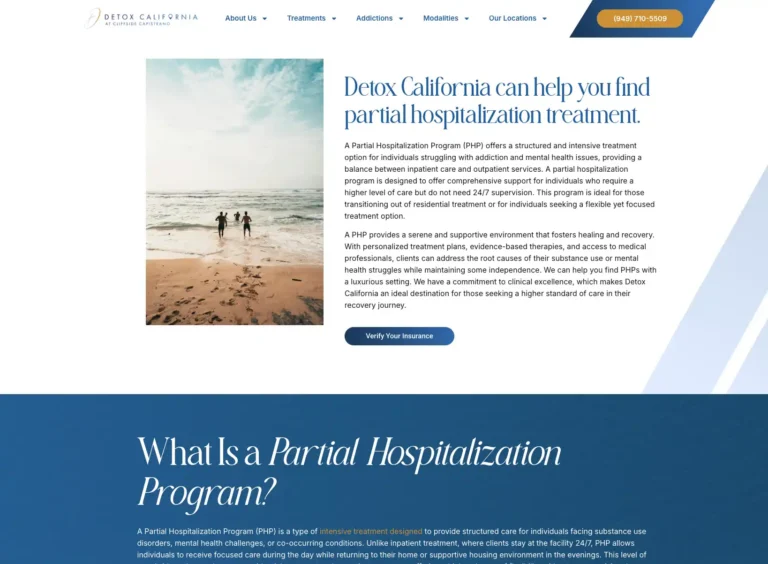
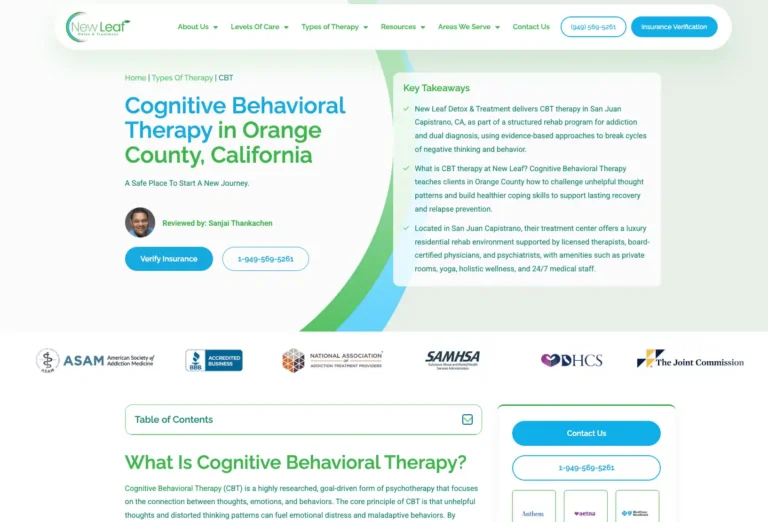
Addiction treatment programs we’ve helped grow.
Client reviews
Rated 5.0 on Google and 4.9 on Clutch.
GoogleWhat clients say on Google
What is AI search optimization?
It is making your organization easy for AI tools like ChatGPT, Perplexity and Google AI Overviews to understand, trust and cite, through clear facts, answer-first content, structured data and consistent listings.
Is AEO different from SEO?
They overlap heavily. SEO helps you rank in search results; AEO focuses on being quoted inside AI-generated answers. Most of the foundation is shared.
Can you guarantee ChatGPT will recommend us?
No. Nobody controls AI answers. We can improve the odds and accuracy, and show you how your visibility changes over time.
How do you measure AI visibility?
We run a set of patient-style questions through the major AI tools on a schedule and track whether you are mentioned, how you are described and whether your site is cited.
Does this work for mental health providers too?
Yes. The same approach applies to clinics, psychiatry practices and therapy groups.
Which AI tools do you track?
ChatGPT, Perplexity, Google Gemini and Google AI Overviews, plus others as they become relevant.
Can AI tools say something wrong about us?
Yes, usually because of outdated or inconsistent information online. Finding and fixing those sources is a core part of the work.
Do we need a separate AI strategy if we already do SEO?
Strong SEO covers much of it. AI optimization adds entity cleanup, answer-first content, expanded structured data and ongoing AI visibility tracking.
About the author
Ara Bedelian
Ara has spent more than seven years working with addiction treatment centers and mental health providers on website design, branding and search engine optimization. His work spans every stage of how someone finds treatment, from the first Google search to the moment they decide to call.
Keep exploring
Related services.
More for addiction treatment programs
Free website audit
Ready to grow with a partner who cares?
Tell us a little about your organization. We’ll review your website and search presence and share clear, practical recommendations — free.
- ✓A personalized website & SEO review
- ✓Clear next steps, no jargon
- ✓No obligation, no pressure
Prefer to talk? Call (949) 394-7041