
Addiction treatment marketing
Addiction treatment marketing for the moment someone reaches out.
Most people looking for rehab are scared, rushed and comparing several programs at once. We build the website, search presence and brand that help them choose yours, then make sure every call can be traced back to what brought it in.
4.9 on Clutch 5.0 on GoogleBoutique team in Orange County, CABehavioral health specialists

Written by Ara Bedelian, Founder & CEO7+ years in behavioral health marketing · Updated
Built for addiction treatment programs
What it is
What addiction treatment marketing actually means.
Addiction treatment marketing is how a detox, residential or outpatient program gets found and chosen by people looking for help. In practice that means a website that answers the questions families ask, search visibility on Google and in AI answers, a brand that feels trustworthy, and tracking that shows which efforts lead to admissions calls. It has to work inside the rules for this industry, including LegitScript and HIPAA.
Families decide in three moments
They search, they compare and they call. Most programs only invest in one of those. We look at all three, because a strong ranking doesn’t help if the website loses people before they pick up the phone.
The rules are different here
Google won’t run addiction treatment ads without LegitScript certification, and claims about outcomes get scrutiny. We write and build with that in mind from the start, so nothing has to be pulled later.
Census depends on owned channels
Paying for leads from call centers and directories gets expensive fast and you never own the relationship. Calls that come from your own site and listings cost less over time and stay yours.
Search is splitting in two
People still use Google, but more of them now ask ChatGPT or read an AI Overview first. Your marketing has to work in both places, which is why AI search is part of every plan we build.
The addiction treatment marketing guide
Marketing a treatment program in a crowded, regulated field.
Key takeaways
- In 2025, 47.2 million people needed substance use treatment and only about 1 in 6 received it.
- Most people with an untreated substance use disorder do not think they need treatment, so families are often the ones searching.
- Google and Meta require LegitScript certification to advertise addiction treatment in the U.S.
- Patient brokering is a federal crime under EKRA, so growth has to come from channels you own.
- The programs that win combine a trustworthy website, search visibility, local listings, AI visibility and clear tracking.
The treatment gap is the context for everything
Addiction is common, and most people who need treatment never get it. SAMHSA’s 2025 National Survey on Drug Use and Health found 44.6 million people aged 12 and older had a substance use disorder in the past year. Of the 47.2 million who needed treatment, only 7.6 million received it, about one in six.
The same survey found that among adults with a substance use disorder who did not get treatment, 94.5% did not think they needed it. That has a big implication for marketing: the person searching is often a parent, partner or friend, not the person who needs care. Your website, listings and content have to speak to both.
How families actually find a program
That path runs through regular search results, the map pack, AI answers and the referral conversations that happen offline. A program has to be visible, clear and trustworthy in every one of those places.
The rules that shape this industry
Addiction treatment is one of the most regulated categories in digital marketing, and for good reason. A few rules shape almost every decision we make.
| Rule | What it means for marketing | Source |
|---|---|---|
| LegitScript certification | Required to advertise addiction treatment on Google and Meta in the U.S. | Google Ads policy; Meta ad standards |
| EKRA (18 U.S.C. § 220) | Paying or receiving anything of value for patient referrals can be a federal crime | Federal law, 2018 |
| State brokering laws | California and Florida have their own patient brokering statutes | CA SB 1228; Fla. Stat. 817.505 |
| Health data and tracking | Sharing health information with ad platforms has led to federal enforcement | HHS OCR guidance; FTC actions |
| Google quality guidelines | Health topics are held to a higher standard of trust and expertise | Google Search Central |
The five pieces of a treatment center marketing plan
1. Brand and reputation
Families compare programs that often look the same. A clear name, calm visual identity and honest voice help yours stand out. Reviews, accreditation and real people on your team do the rest. See branding.
2. The website
Your site has to answer fit, trust and cost questions within seconds, especially on a phone. See addiction treatment website design.
3. Visibility
Rankings for specific searches, a strong map presence and accurate AI answers. See rehab SEO, local SEO and AI search optimization.
4. Tracking
Call tracking and source tagging show which channels lead to admissions so your budget follows results. See rehab lead generation.
5. Admissions
Marketing can only bring people to the phone. How quickly calls are answered and how warmly they are handled decides the rest. We review answer rates and follow-up as part of every engagement.
Where to start
Most programs get the fastest return from fixing the website and local search, because every other channel depends on them. A typical first year looks like this.
Questions to ask any agency, including us
- Do you buy, sell or route leads? The answer should be no.
- Who owns the website, accounts and data? You should.
- How do you report results? Calls and admissions, not just traffic.
- Do you know LegitScript requirements? Ask for specifics.
- How do you handle health data in tracking? Get a clear answer.
- Who will I work with each week? Names, not a department.
Marketing to families, not just patients
Because so many people with a substance use disorder do not believe they need help, parents, spouses and adult children often start the search. They need different content than the person entering treatment: how to talk to a loved one, what an intervention is and is not, what happens to family members during treatment, and how to pay for it. Pages written for families build trust early and often lead to the call.
- How to help someone who does not want help yet
- What happens in detox and residential care
- Family involvement and visiting policies
- Paying for treatment, including insurance basics
- What to pack and what to expect on day one
- Aftercare and how families stay involved
Referral partners and community presence
Not every admission starts online. Hospitals, therapists, employee assistance programs, probation officers and alumni all refer people to treatment. Marketing supports these relationships with clear referral pages, easy-to-share program summaries and printed materials that match your website. Referral relationships must never involve payment for referrals, which brings EKRA and state laws into play.
Reviews and reputation
Families read reviews carefully, and so do AI tools. A respectful process for asking alumni and families for feedback, prompt and private-minded responses, and a habit of fixing what reviews reveal can change how a program is perceived. We help set this up without pressuring anyone or confirming patient status in public responses.
Sources
- SAMHSA, 2025 National Survey on Drug Use and Health, Annual National Report: www.samhsa.gov/data/sites/default/files/reports/rpt57150/2025-nsduh-annual-national-html/2025-nsduh-annual-national.htm
- Google Ads Help, Healthcare and medicines: addiction services: support.google.com/adspolicy/answer/176031
- LegitScript, Addiction Treatment Certification: www.legitscript.com/certification/addiction-treatment-certification/
- Meta, Drug and alcohol addiction treatment ad standards: transparency.meta.com/policies/ad-standards/restricted-goods-services/drug-alcohol-addiction-treatment/
- 18 U.S.C. § 220 (EKRA): www.law.cornell.edu/uscode/text/18/220
- HHS OCR, Use of online tracking technologies by HIPAA covered entities and business associates: www.hhs.gov/hipaa/for-professionals/privacy/guidance/hipaa-online-tracking/index.html
- Google Search Central, Creating helpful, reliable, people-first content: developers.google.com/search/docs/fundamentals/creating-helpful-content
What we do
The pieces of a treatment center marketing plan.
We usually start with what will move admissions fastest for your program, then add the rest over time.
Website design and rebuilds
Pages for each level of care, insurance, admissions and your facility, written for a worried parent reading on a phone. See addiction treatment website design.
Rehab SEO
Rankings for the searches that turn into calls, such as alcohol detox in your city or residential treatment that takes a specific insurance. See rehab SEO.
Local SEO and maps
A well-run Google Business Profile, honest city pages and a review process. See local SEO for rehab centers.
AI search visibility
Content and structured data that help ChatGPT, Perplexity and Google AI Overviews describe your program correctly and cite your website.
Branding
A name, logo and voice that feel calm and credible, so your program stands out from the dozens that look the same. See branding.
Call tracking and reporting
CallRail or CallTrackingMetrics connected to your site, so you can see which pages, searches and listings lead to admissions conversations.
How it works
How we work with treatment centers.
Listen
We learn your levels of care, payer mix, census goals and what makes your program different.
Audit
We review your website, rankings, map listings, reviews and how you show up in AI answers.
Build
We fix the biggest gaps first, usually the website and local search, then expand content.
Measure
Weekly reporting and call tracking show what is working, and we adjust from there.
A different approach
Marketing that doesn’t feel like a sales funnel.
People can tell when a rehab website was built to capture leads instead of to help. We’d rather earn the call.
What families often run into
- Pop-ups and chat widgets before the page even loads
- Vague promises and stock photos of the beach
- A phone number that routes to a call center
- No straight answer about cost or insurance
What we build instead
- Clear explanations of each level of care
- Real photos of your facility and honest descriptions
- Calls that go to your own admissions team
- Insurance and cost questions answered up front
CreateFlo has exceeded our expectations across all areas of the project.
Our work
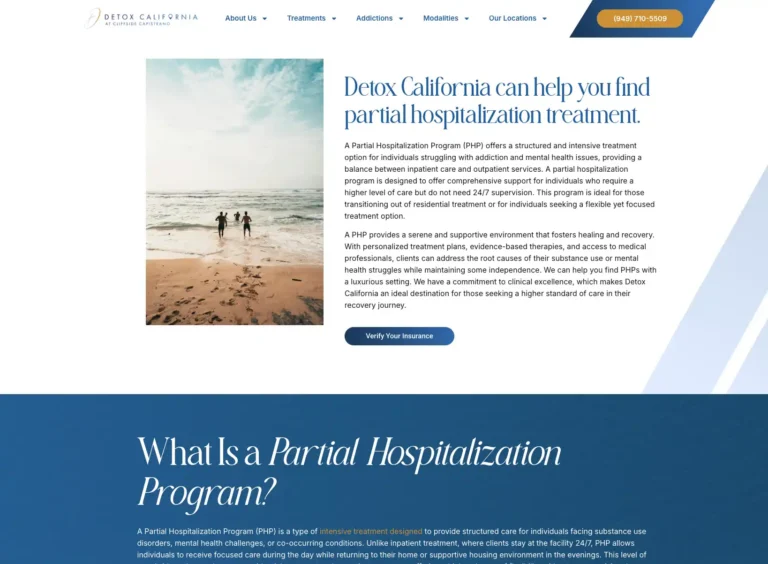
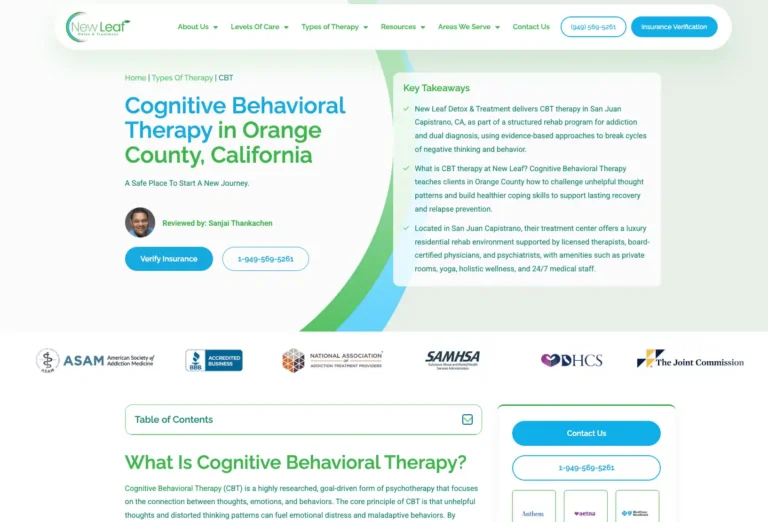
Addiction treatment programs we’ve helped grow.
Client reviews
Rated 5.0 on Google and 4.9 on Clutch.
GoogleWhat clients say on Google
What is addiction treatment marketing?
It is the work of getting a detox, residential or outpatient program found and chosen by people seeking help: the website, search and AI visibility, local listings, branding and the tracking that ties it all to admissions calls.
Do you only work with addiction treatment centers?
No. Behavioral health is our specialty, which includes addiction treatment, mental health clinics, psychiatry, TMS and ketamine providers.
How is marketing a rehab different from other healthcare marketing?
There are extra rules. Google requires LegitScript certification for addiction treatment ads, patient brokering is illegal in many states, and claims about success rates draw scrutiny. The audience is also often in crisis, which changes how pages should be written and designed.
Do you buy or sell leads?
No. We help you generate calls and form submissions through your own website, search rankings and listings. Every inquiry goes straight to your team.
Where should a treatment center start?
Usually with the website and local search, because they affect every other channel. A free audit will show where your biggest gaps are.
How long does it take to see results?
Website and conversion fixes can help within weeks. SEO and AI search usually take three to six months to build momentum, depending on your market and where you start.
Do we need LegitScript certification if we only do SEO?
No. LegitScript is required to run addiction treatment ads on Google and Meta. Organic search and map listings do not require it, although following its standards is still good practice.
Should we stop buying leads right away?
Usually not overnight. We build owned channels first, track every source, and help you reduce purchased leads as your own inquiries grow. Any existing lead arrangement should also be reviewed by your legal counsel.
About the author
Ara Bedelian
Ara has spent more than seven years working with addiction treatment centers and mental health providers on website design, branding and search engine optimization. His work spans every stage of how someone finds treatment, from the first Google search to the moment they decide to call.
Keep exploring
Related services.
More for addiction treatment programs
Free website audit
Ready to grow with a partner who cares?
Tell us a little about your organization. We’ll review your website and search presence and share clear, practical recommendations — free.
- ✓A personalized website & SEO review
- ✓Clear next steps, no jargon
- ✓No obligation, no pressure
Prefer to talk? Call (949) 394-7041