
Mental health marketing
Mental health marketing that sounds like a person, not a pitch.
People looking for therapy or psychiatric care are often unsure what they need or whether it’s “bad enough.” We help mental health providers meet them there, with websites, search and messaging that make reaching out feel easier.
4.9 on Clutch 5.0 on GoogleBoutique team in Orange County, CABehavioral health specialists

Written by Ara Bedelian, Founder & CEO7+ years in behavioral health marketing · Updated
Built for mental health providers
The short answer
What mental health marketing is.
Mental health marketing is how therapy practices, outpatient clinics and psychiatric providers reach the people who need them. It includes a clear and calming website, search visibility for the conditions and services you offer, local listings, AI search visibility and a brand people feel safe contacting. Done well, it lowers the barrier to asking for help instead of adding pressure.
People search symptoms, not services
Someone may type “why do I feel numb all the time” long before “outpatient depression treatment.” We create content that meets them at that earlier stage and gently explains their options.
Trust is the conversion
In mental health, the decision to book often comes down to whether a provider feels safe and approachable. Your website’s tone, photos and clarity carry as much weight as your rankings.
Insurance and access questions come first
Who you see, whether they take my insurance, whether I can do it online. Pages that answer these clearly turn visits into booked appointments.
The mental health marketing guide
Reaching people who are not sure they need help yet.
Key takeaways
- About one in five U.S. adults had a mental illness in 2025, and only about half of them received treatment.
- The most common reason people gave for not getting care they needed was believing they should handle it on their own.
- Mental health marketing works best when it lowers the barrier to reaching out, not when it creates urgency.
- Providers are scarce in much of the country, so clear information about availability, insurance and telehealth is a real advantage.
- Privacy and tone are part of the strategy, not afterthoughts.
The size of the need
Mental health conditions are common, and many people who need care do not get it. According to SAMHSA’s 2025 National Survey on Drug Use and Health, about 54.6 million adults had a mental illness in the past year, and roughly half received any treatment. Among people who felt they needed care and did not get it, the most common reason was believing they should handle it on their own.
That last number matters most for marketing. The biggest barrier is often not cost or access but hesitation. Content that normalizes reaching out, explains what care actually involves and makes the first step small can make a real difference.
Why marketing mental health care is different
Mental health marketing has to work for people who may be anxious, depressed, ashamed or simply unsure. Tactics that work in other industries, such as countdown offers, aggressive retargeting or fear-based headlines, tend to backfire here. They can also cross ethical lines for licensed clinicians.
| Common approach | Why it backfires | What works better |
|---|---|---|
| Urgency and scarcity messages | Adds pressure to someone already overwhelmed | Clear next steps and honest availability |
| Diagnosing in blog posts | Can mislead and erodes trust | “Is this right for me” guidance and when to seek help |
| Promises of quick results | Sets unrealistic expectations | Plain descriptions of what treatment involves |
| Ad pixels on condition pages | Raises privacy and legal concerns | Privacy-aware analytics and owned channels |
| Stock photos of distress | Feels bleak and generic | Real photos of your space and team |
Access is a selling point
In much of the country, it is hard to get an appointment. HRSA counts about 137 million people living in federally designated mental health professional shortage areas, and surveys of psychologists show many have no openings for new patients. When people are struggling to find anyone available, a practice that clearly shows who is accepting new clients, what insurance is accepted and whether telehealth is available stands out.
The channels that matter most
A website people feel safe on
Your website does most of the persuading. See mental health website design for what that involves.
Search that meets people early
People often search symptoms before they search services. Condition pages, helpful articles and clinician profiles bring them in at that stage. See behavioral health SEO and SEO for therapy practices.
AI answers
KFF’s 2026 polling found that about a third of adults used AI chatbots for health information in the past year, and 16% used them for mental health. Being described accurately in those answers is increasingly important. See AI search optimization.
Specialty services
Psychiatry, TMS and ketamine programs each need their own careful approach. See psychiatry marketing, TMS marketing and ketamine clinic marketing.
Privacy is part of the strategy
Federal regulators have taken action against health companies that shared sensitive information with advertising platforms. For mental health providers, simply visiting a page about a condition can reveal something private. We keep tracking minimal on sensitive pages, avoid sending health information to ad platforms, and keep forms short.
Content that respects the reader
Good mental health content is written in plain, warm language, avoids diagnosing, explains when and how to seek help, and is reviewed by your clinicians. It links to crisis resources where appropriate, such as the 988 Suicide and Crisis Lifeline, and never makes promises about outcomes.
- Plain language, no jargon without explanation
- Clinician review on anything clinical
- Crisis resources where they belong
- No outcome promises or guarantees
- Clear next step on every page
- Named authors and reviewers
Measuring what matters
We track calls, form submissions and booking requests by page and source, and report them alongside rankings and AI visibility. Where your scheduling system allows, we look at which channels lead to booked first sessions, not just inquiries.
Questions people ask before they reach out
Most hesitation comes down to a few questions. Answering them clearly on your website removes friction before the first call.
| Question | Where to answer it |
|---|---|
| Is what I am feeling bad enough to get help? | Condition pages and articles |
| Who would I see, and what are they like? | Clinician profiles |
| Do you take my insurance? What will it cost? | Insurance and fees page |
| Can I do this online? | Telehealth page |
| How soon can I be seen? | Getting started page and booking form |
| What happens in the first session? | Getting started page |
Growing a group practice
For group practices, marketing is often about filling new clinicians’ caseloads quickly and keeping specialties balanced. We prioritize clinician pages and specialty content for whoever has openings, and adjust as schedules fill.
Sources
- SAMHSA, 2025 National Survey on Drug Use and Health press release (July 27, 2026): www.samhsa.gov/newsroom/press-announcements/20260727/samhsa-releases-annual-national-survey-on-drug-use-and-health
- HRSA, Designated Health Professional Shortage Areas quarterly report: data.hrsa.gov/Default/GenerateHPSAQuarterlyReport
- Epic Research, Telehealth utilization has stabilized (March 2025): www.epicresearch.org/articles/telehealth-utilization-has-stabilized-mental-health-departments-continue-to-see-highest-rates
- KFF Tracking Poll on Health Information and Trust (2026): www.kff.org/health-information-trust/new-kff-tracking-poll-on-health-information-and-trust-finds-one-in-three-adults-have-used-ai-chatbots-for-health-advice/
- 988 Suicide and Crisis Lifeline: 988lifeline.org/
What we do
Marketing services for mental health providers.
We combine the pieces that matter most for your type of practice.
Mental health website design
Calm, accessible sites with clear booking paths. See mental health website design.
Mental health SEO
Pages for each condition and service you offer, built to rank locally and statewide. See behavioral health SEO.
SEO for therapy practices
Specialty, clinician and location pages for group practices and counseling centers. See SEO for therapy practices.
AI search visibility
Structured, accurate content that AI assistants can understand and cite when people ask where to get help.
Branding
A name, look and voice that feel human and steady. See branding.
Specialty programs
Focused marketing for psychiatry, TMS and ketamine providers.
How it works
How a mental health engagement runs.
Understand
Your services, providers, payers, capacity and the clients you most want to help.
Audit
Website, rankings, listings, reviews and how AI tools describe you today.
Build
The website and the core condition and service pages first, then local and AI search.
Grow
Weekly reporting on calls and bookings, with new content added as you grow.
Tone matters
Marketing that respects the reader.
Mental health marketing can easily slip into fear or hype. We stay away from both.
What we avoid
- Urgency tactics and countdown offers
- Diagnosing readers from a blog post
- Promising quick fixes or guaranteed results
- Stock photos that feel staged or bleak
What we do instead
- Plain language about what therapy and treatment involve
- Clear “is this right for me” guidance
- Honest information about insurance and cost
- Warm, real imagery of your space and team
They are exemplary.
Our work
Mental health providers we’ve helped grow.
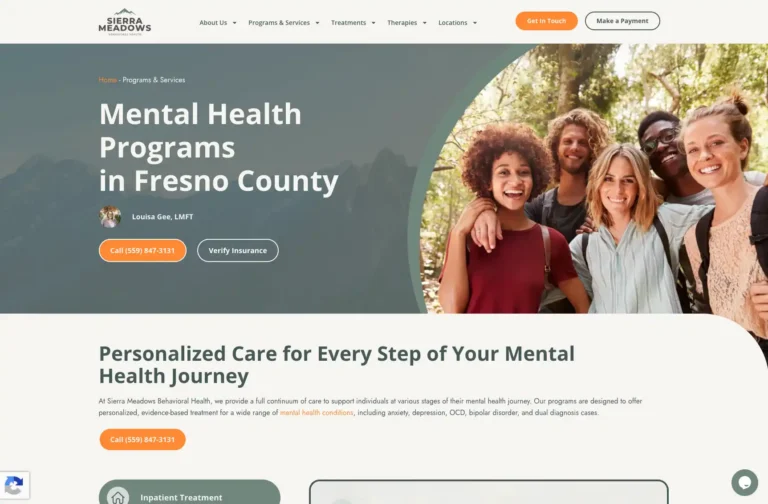
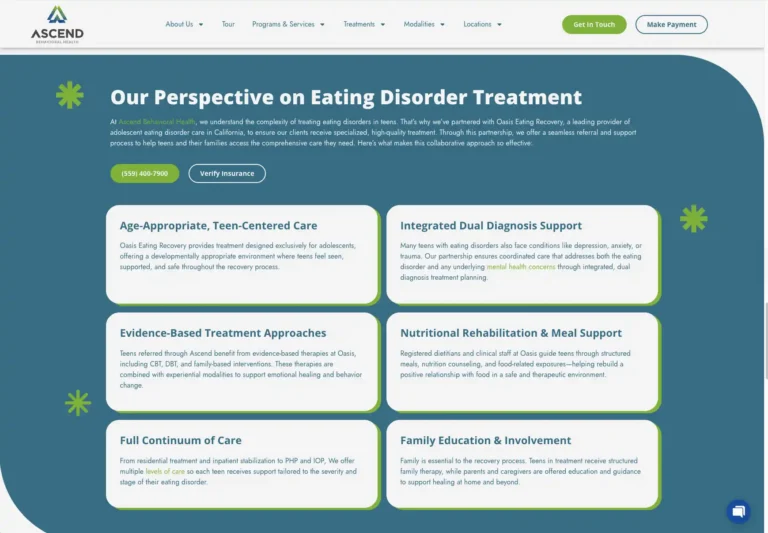
Client reviews
Rated 5.0 on Google and 4.9 on Clutch.
GoogleWhat clients say on Google
What is mental health marketing?
It is the website, search, AI visibility, local listings and brand work that help people find and contact a mental health provider, done in a way that lowers the barrier to asking for help.
Do you work with solo therapists?
Our services fit group practices, clinics and multi-provider organizations best. Solo therapists can still benefit from our website and SEO work, and we are happy to talk it through.
Can you help us get more clients who use insurance, or more private pay?
Yes. We plan pages and search terms around the payer mix you want, and make insurance information clear so the right people reach out.
Is marketing a mental health practice HIPAA-sensitive?
Yes. We avoid tracking tools that collect health information on sensitive pages and keep forms and analytics set up with privacy in mind.
Do you write about mental health conditions?
Yes, in plain language, with sources and with review by your clinicians before anything is published.
Should we list our fees publicly?
In most cases, yes. Clear information about cost and insurance reduces anxiety and filters out mismatched inquiries. Ranges or starting rates work if exact fees vary.
How do we market telehealth?
With dedicated pages for online care that explain which states you serve, how sessions work and what technology is used, limited to where your clinicians are licensed.
Do you work with eating disorder programs?
Yes. Eating disorder care needs particularly careful language, and we work closely with your clinical team on every page.
About the author
Ara Bedelian
Ara has spent more than seven years working with addiction treatment centers and mental health providers on website design, branding and search engine optimization. His work spans every stage of how someone finds treatment, from the first Google search to the moment they decide to call.
Keep exploring
Related services.
More for mental health providers
Free website audit
Ready to grow with a partner who cares?
Tell us a little about your organization. We’ll review your website and search presence and share clear, practical recommendations — free.
- ✓A personalized website & SEO review
- ✓Clear next steps, no jargon
- ✓No obligation, no pressure
Prefer to talk? Call (949) 394-7041